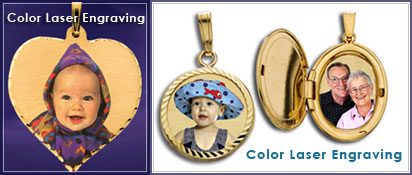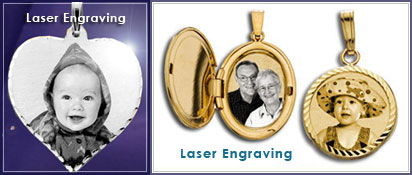
Laser Engraving
Photo Pendants: Using our patented laser engraving process, we can offer you a permanent keepsake that combines your cherished memories with the beauty and appeal of gold. A combination of our trained computer experts, and our engraving machinery will engrave your pendant deeply and very detailed. The engraved process gives your gold photo pendant a hologram look that sparkles when worn.
Photo Lockets: Our advanced machinery will imprint your photo in more of a black and white tone. Compare this process to more of a grey scale newspaper print.
At PicturesOnGold.com we used advanced engraving machinery to engrave your favorite photo pendants & picture charms. Your photo pendant and picture charm can be done in 14k gold or sterling silver. Our custom photo jewelry pendants and picture jewelry charms are available in solid 14 carat gold or sterling silver in a wide range of styles and designs. Picture bracelets, photo lockets, picture charms, picture pendants, watches, are just a few examples of the kinds of custom picture and photo jewelry we can create for you and your loved ones. No matter the occasion, making your memories last a lifetime with PicturesOnGold!
Locket Jewelry, Photo Pendants Jewelry
All photo pendants are trademarked under registration #2,224,273 and have been registered in the United States Patent and Trademark office in Washington D.C., effective February 16, 1999. All photo pendants come with a Numbered Certificate of Authenticity revealing the trademark number. In addition, our photo pendants are guaranteed to be 14K gold or silver where designated and all of our pendants, jewelry, and custom picture jewelry pieces carry a lifetime guarantee against normal wear and defects.
|